
When floodwater reached our school this autumn, it changed more than our classrooms. It changed what our children wanted to talk about, and it changed how we teach survival skills. This is the story of how Firefly Forest School, a nature-based school in Lat Phrao, Bangkok, turned a frightening experience into some of the most meaningful lessons of the year.
After the flood: a school that came back together
For several days, water stood where children usually play. Our team and our Firefly families watched over the school from the first day the water came in, and once it went down, everyone helped clean every room, every corner and every toy, so that the children would come back to a home that was clean, safe and ready for learning again.
It was not the kind of week anyone would choose. But it showed us how much our community cares for each other, and it gave us a clear purpose for what came next.

Why we redesigned our Survival Skills Camp
Following the flooding, we took time to reflect and completely redesigned our Survival Skills Camp. Every lesson now connects with what the children had just been through, and every skill is something they can actually use in everyday life.
One thing became clear very quickly: the children had so many stories they wanted to share. What they had seen, heard and felt during the flood, and what they remembered. Little by little, those stories found their way into the lessons and turned into questions, conversations and discoveries we made together.
Sometimes the most meaningful learning starts with the real experiences children carry with them into the classroom.
Hands-on skills, not just rules
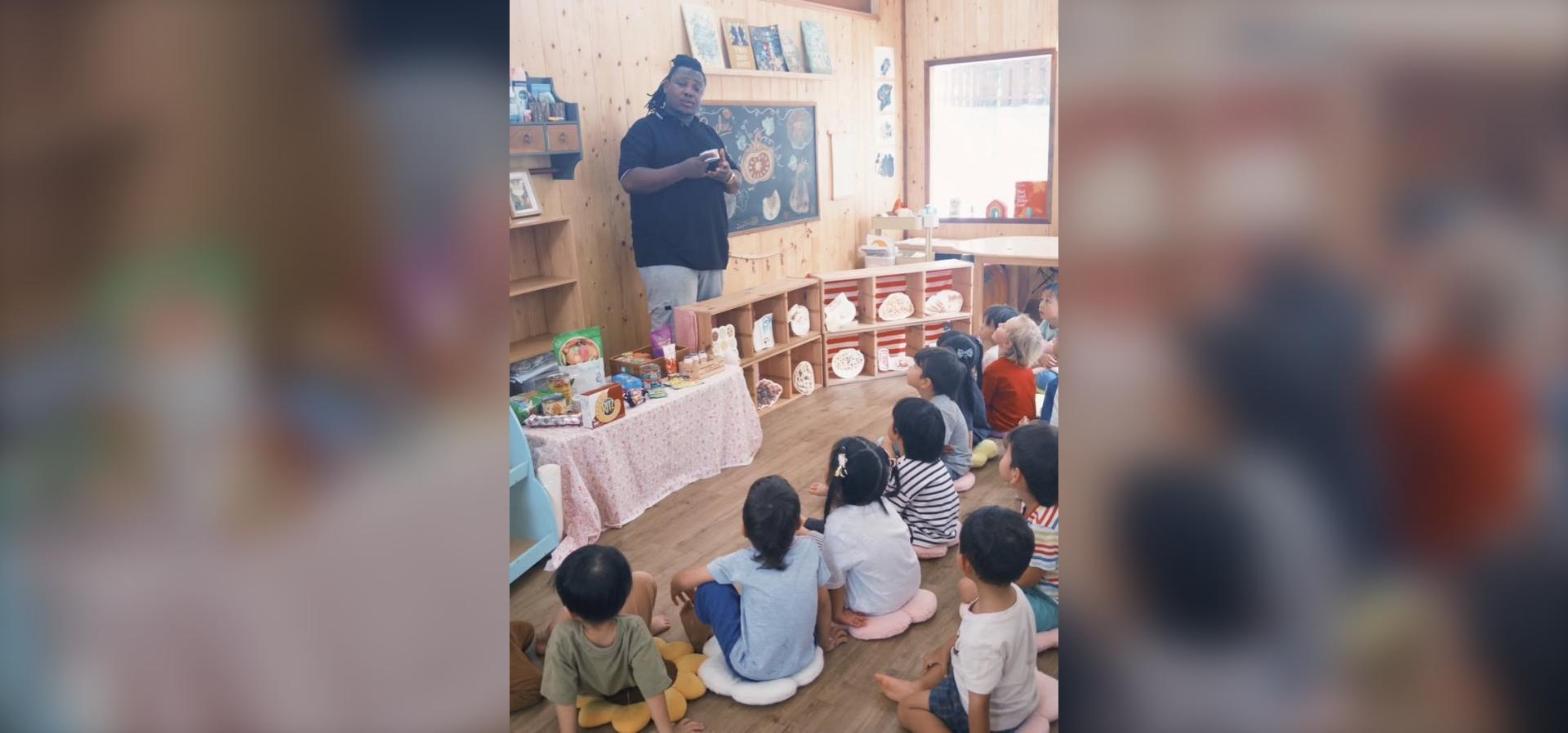
Survival education for young children is not about scaring them or making them memorise a list of rules. At camp, children learned by doing: handling a real fire hose on the school lawn, practising basic first aid on CPR training mannequins, and putting together emergency kits with a rescue volunteer.
Each activity was guided, calm and playful, so that children could build real confidence. Knowing what to do, and having already tried it once, is what helps a child stay steady when something unexpected happens.

Elevator survival skills with FROG Team Thailand
What happens if the lift you use every day suddenly stops? In Bangkok, where so many families live in condominiums, that is a very real question.
Our young learners explored real-life elevator emergency scenarios with PorNoo from FROG Team Thailand. Through guided, hands-on practice, the children learned how to stay calm, how to ask for help, what the safety procedures are, and what to do and not do if they are ever stuck in a lift.
We believe survival skills teach children to meet unexpected situations mindfully, with confidence and with the ability to make good decisions.

What we hope children take home
Our hope is not simply that children know what to do in an emergency. We hope they gradually grow into mindful, confident people who know how to take care of themselves, care for others, and face an unpredictable world with courage.
That is what nature-based, experiential learning means to us: real experiences, real conversations and real skills, in a setting where children feel safe enough to try.
Five simple safety conversations to have at home
- Know your address and a phone number. Practise saying them together until they come easily.
- Stuck in a lift? Stay calm, press the alarm or call button, and wait for help. Never try to climb out.
- Water rising? Move up and away from the water and stay with an adult. Never walk or play in floodwater.
- Make a family emergency bag together: a torch, water, snacks, a small first-aid kit and a favourite comfort item.
- Talk about feelings. After a scary event, let children tell their story, draw it or play it out. Listening is part of feeling safe again.
Want to see how we learn through real experiences every day? Explore our nature-based programs, find out about our holiday and survival camps, or book a school tour and meet our team in Lat Phrao.


Comments are closed